
Tomas Ferreira
Curriculum Lead
Quantitative researcher for eight years before moving full-time into instruction. Built the original time-series track after noticing how often published ML-finance papers failed basic leakage checks.


Posdanukel started in 2015 with a straightforward question: could machine learning do what traditional financial analysis couldn't — find patterns in noisy, high-dimensional market data that human intuition consistently misses?
The answer wasn't a clean yes. It was a years-long process of failed experiments, recalibrated expectations, and gradually better results.
What we built is a structured learning environment where people working in finance, data science, or research can engage seriously with the intersection of those two fields — without the hype that usually surrounds it.
Stock price prediction sits at a difficult intersection. The data is real, the stakes are real, and the models need to be both rigorous and honest about their own uncertainty. We don't teach people to build systems that claim to forecast the market — we teach the craft of building models that reason well about financial signals.
Coverage spans time-series modelling with LSTMs and Transformers, feature engineering from OHLCV data, cross-validation approaches that respect temporal ordering, and deployment considerations that practitioners actually face.

Start with the problem, not the model Each module opens with a real financial question — momentum persistence, mean-reversion on intraday data, earnings surprise modelling — before any architecture is introduced.
Build in the open, break deliberately Participants run code that fails. Overfitting on financial data looks convincing until you test it correctly — so we design exercises around catching that specific failure.
Evaluate with temporal integrity Walk-forward validation, embargo periods between train and test windows — these aren't optional add-ons. They're treated as non-negotiable from the first project onward.
Present findings like a practitioner The final deliverable in each track is a written analysis, not a model score. Participants explain what the model found, where it's uncertain, and what they'd do with 30 more days of data.
Posdanukel is a small team with long experience. We don't have a marketing department — the people who built the curriculum are the people who deliver it.
Curriculum Lead
Quantitative researcher for eight years before moving full-time into instruction. Built the original time-series track after noticing how often published ML-finance papers failed basic leakage checks.
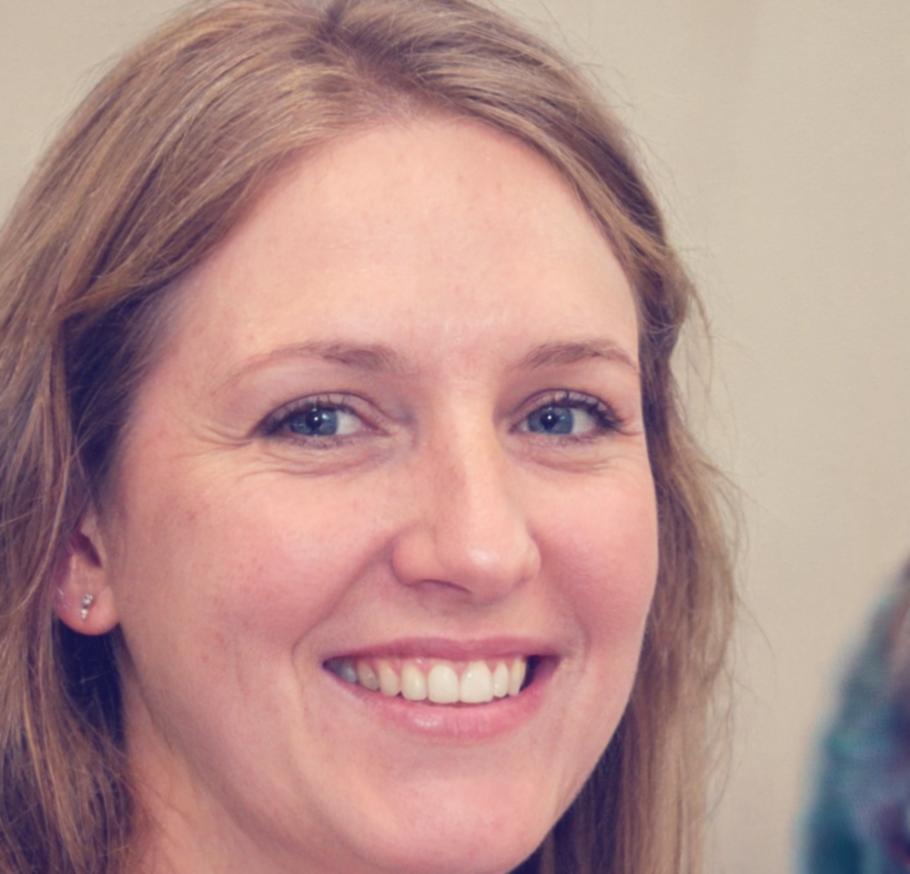
Instructor — Deep Learning
Applied ML researcher with a background in econometrics. Leads the Transformer and attention-based architecture modules. Writes clearly about things that are usually explained poorly.
"The gap between a model that backtests well and one that survives contact with live data is enormous. We spend a lot of time in that gap."
Participant feedback
Yuki Ambrosini — "I came in thinking I understood cross-validation. The walk-forward section showed me I didn't. Genuinely changed how I approach evaluation at work."
Callum Dąbrowski — "The exercises are harder than I expected. I had to redo the feature engineering module twice. By the third pass it finally clicked."